
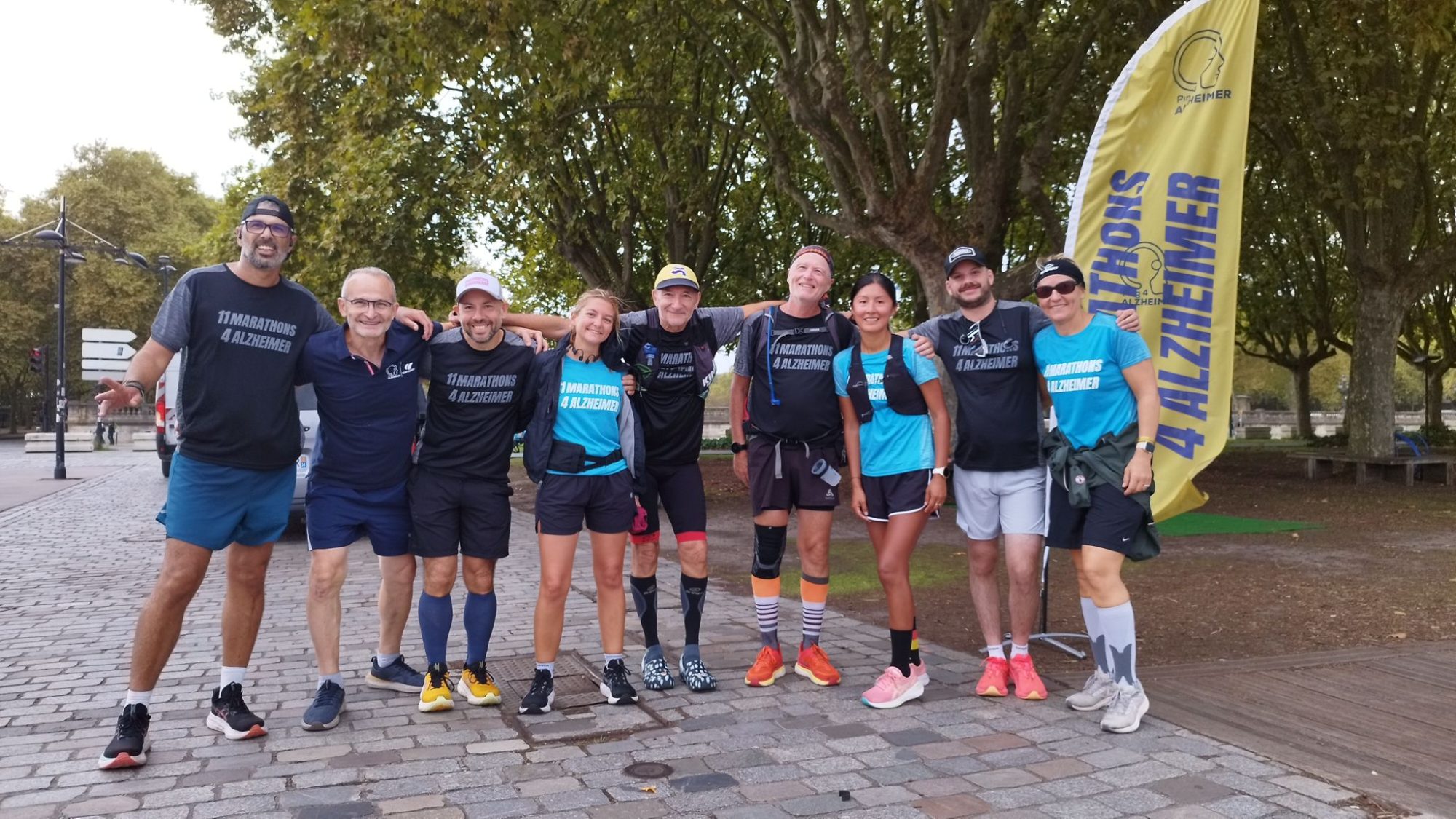
What would it take for a recreational runner to complete eleven marathons in eleven consecutive days?
For Renato Walkowiak, the answer was not just determination. It was also physiology, smart coaching, and a meaningful cause.
In the summer of his challenge, Renato set out to run 11 marathons in 11 different cities across France. The symbolic number was not accidental. In table tennis, a match is played to 11 points, and Renato wanted each marathon to represent one of those points. The goal was to raise funds for Ping4Alzheimer, an organization that supports programs that help combat Alzheimer’s disease through table tennis.
By the end of the journey, Renato had run more than 288 miles in eleven days, raised 30,000 euros, and inspired hundreds of people who joined him along the route.
But the most remarkable part of the story is where it started.
From Half Marathons to an Extraordinary Goal
Before committing to the project, Renato was not an elite runner. In fact, his longest distance had been a half marathon, about 13 miles.
The idea of running eleven marathons in a row might sound impossible for someone with that background. Yet Renato believed the challenge could be achieved with the right preparation.
That is when he partnered with endurance coach Manuel José Conejeros.
Instead of relying on guesswork, the two decided to base the entire training process on physiological data. Renato began regular assessments using CHASKi, allowing the team to track key respiratory and metabolic markers that reveal how the body responds to endurance training.
Over the next eight months, the data guided every step of the preparation.
Training the Engine for Durability
Because the challenge required running a marathon every day, the priority was not speed.
The key objective was to shift Renato’s first ventilatory threshold to the right. In practical terms, this meant increasing the intensity he could sustain while still relying primarily on aerobic metabolism.
Improving this threshold allowed Renato to run long distances at a comfortable metabolic cost, delaying fatigue and preserving energy across consecutive days of effort.
Training sessions therefore emphasized high aerobic volume, with a progressive increase in weekly mileage. Instead of chasing faster paces, the focus was on building a durable aerobic engine capable of handling repeated long efforts.
Regular CHASKi tests helped verify that the adaptations were occurring. As Renato’s threshold improved, training intensities were adjusted to keep stimulating the right physiological systems.
Recovery as the Hidden Performance Factor
Running one marathon is demanding. Running eleven in a row transforms recovery into the decisive variable.
Coach Conejeros structured the program with this reality in mind. The training plan included not only progressive mileage but also strict attention to recovery habits.
Three elements became essential pillars.
Sleep was prioritized to support nervous system recovery and hormonal balance.
Hydration strategies ensured that daily fluid losses were quickly compensated.
Nutrition focused on replenishing glycogen and supporting tissue repair after each long run.
These factors allowed Renato’s body to absorb the training load and later repeat marathon efforts on consecutive days.
Eleven Cities, Hundreds of Supporters
When the challenge finally began, something unexpected happened.
In each city across France, runners and supporters showed up to join Renato for parts of the route. What started as a personal endurance challenge quickly turned into a community event.
Each marathon represented another point in the symbolic table tennis match against Alzheimer’s.
Day after day, Renato kept moving forward.
By the end of the eleventh marathon, the goal had been accomplished. All 11 marathons were completed, and 30,000 euros were raised for Ping4Alzheimer.
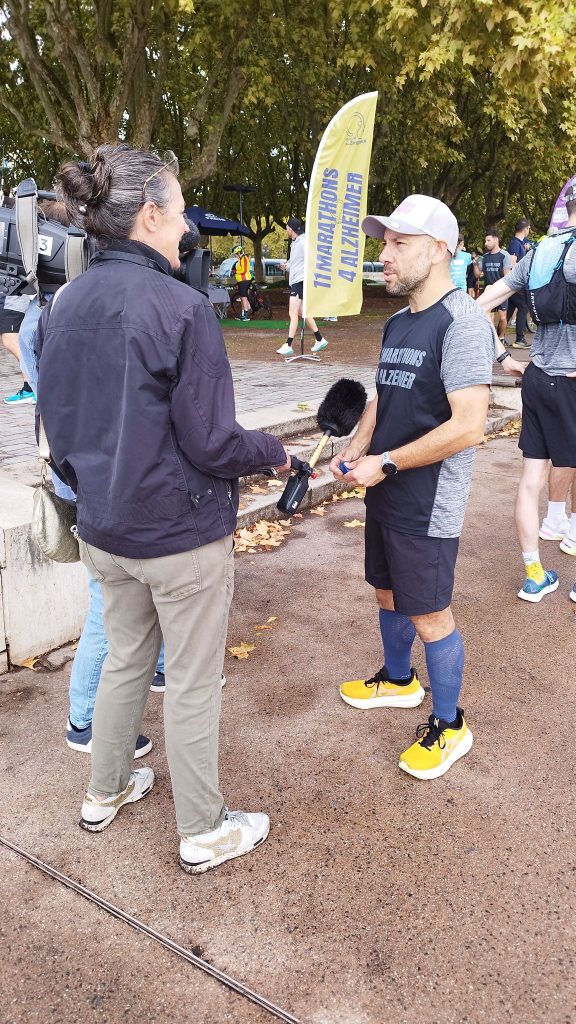
All 11 marathons were completed, and 30,000 euros were raised for Ping4Alzheimer.
A Story About Physiology and Purpose
Renato Walkowiak’s journey is a powerful reminder that endurance achievements are not reserved only for elite athletes.
With structured coaching, physiological insight, and consistent preparation, a recreational runner can accomplish extraordinary things.
Technology like CHASKi does not replace dedication or purpose. But it helps ensure that training decisions are grounded in how the body actually adapts.
In Renato’s case, that combination of data, discipline, and meaning made eleven marathons in eleven days not just possible, but unforgettable.