

High blood pressure affects roughly one in three adults around the world, making it one of the most common and silent threats to cardiovascular health. Despite how widespread it is, many people remain unaware of their condition until it leads to more serious complications. While medication is essential for many, there is growing scientific evidence that breathing can play a powerful role in regulating blood pressure. At CHASKi, we decided to explore this through real-world testing using our own device and app designed to guide breathing with precision and feedback.
Why Slow Breathing Matters
Breathing is not just about oxygen intake. It directly influences the autonomic nervous system, which regulates heart rate, vascular tone, and blood pressure. When breathing slows to around six breaths per minute, the parasympathetic system becomes more active, promoting relaxation and restoring balance. This process increases baroreflex sensitivity, reduces sympathetic drive, and allows blood vessels to relax, mechanisms that together contribute to lower blood pressure.
The evidence supporting this is strong. In a 2023 review of 20 studies, Herawati and colleagues found that slow breathing exercises could reduce systolic blood pressure by up to 54 mmHg and diastolic pressure by up to 17 mmHg. Similarly, Mengden et al. (2022) showed that device-guided slow breathing with pulse wave feedback led to consistent reductions of about 5 mmHg after a single session.
The CHASKi Breathing Protocol
We evaluated ten individuals with hypertension: six men and four women, seven older adults and three adults. Each participant followed a simple three-step protocol:
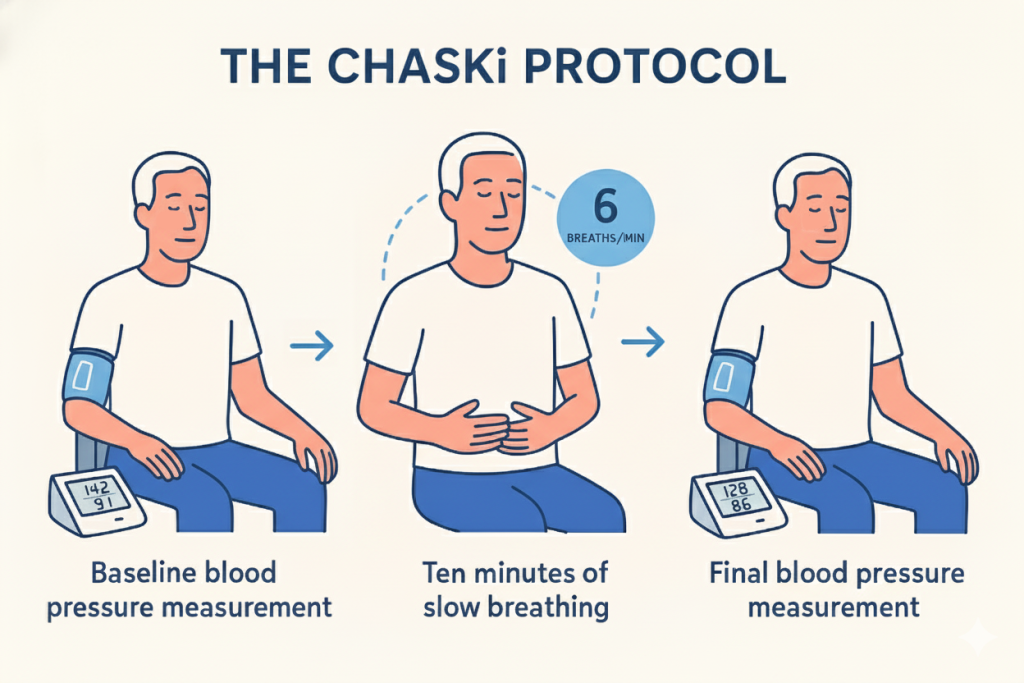
- Baseline blood pressure measurement
- Ten minutes of slow breathing at six breaths per minute, guided by the CHASKi device and app
- Final blood pressure measurement
Participants received visual cues through the CHASKi app to maintain a steady rhythm and real-time feedback to ensure correct execution.
The Results and Experience
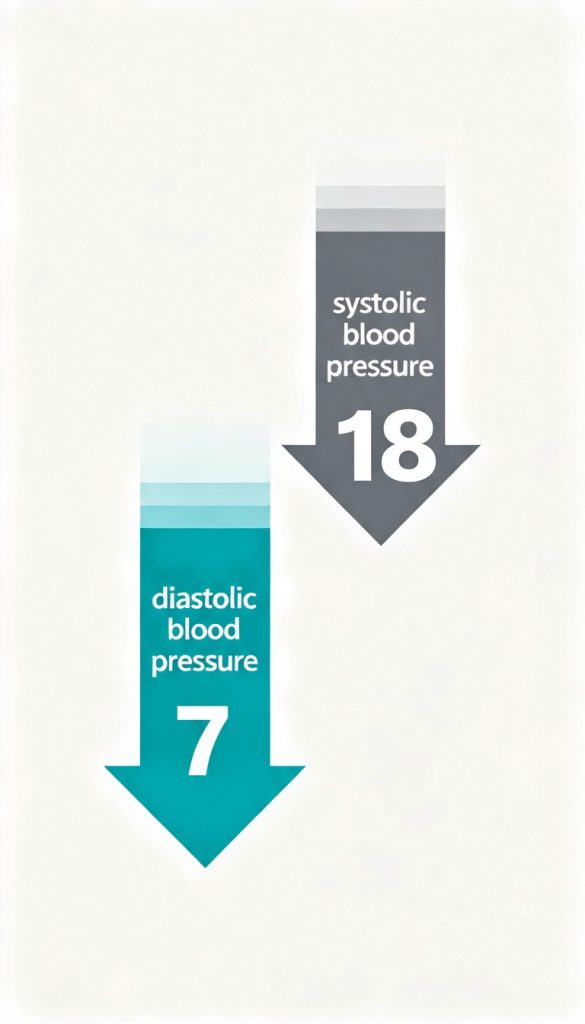
The outcomes were impressive, every participant showed some level of improvement. On average, systolic blood pressure decreased by 18 points and diastolic pressure by 7 points after just one session. All participants were able to follow the instructions easily, confirming that the protocol is both simple and feasible.
The visual guidance provided by the CHASKi app made it effortless for users to keep the expected breathing rhythm, while the real-time feedback helped them understand whether they were performing the exercise correctly. Participants also reported feeling noticeably calmer and more relaxed at the end of the session, a subjective response that aligns with the physiological changes observed.
These results are consistent with the published literature but also highlight something new: when real-time biofeedback is integrated into the breathing process, users gain both awareness and control. This combination enhances adherence and maximizes the physiological benefits.
A First in Breathing Technology
CHASKi is the first wearable device capable of sensing the respiratory cycle and providing immediate feedback in real time. This innovation allows users, clinicians, and coaches to track breathing quality and autonomic response with precision, making guided breathing not only more effective but also measurable.
Our next step is to study the chronic effects of this protocol when performed regularly over several weeks. While existing studies suggest that long-term practice of slow, guided breathing can sustain blood pressure improvements, this remains an area that deserves further exploration. Understanding how daily CHASKi-guided sessions influence cardiovascular adaptation over time will help validate its role as a simple, accessible tool for long-term blood pressure management.
Our experience so far shows that even a single ten-minute session of slow, guided breathing can make a measurable difference, turning every breath into a step toward better health.
Sources
[1] Herawati, I., Mat Ludin, A. F., Mutalazimah, M., Ishak, I., & Farah, N. M. F. (2023). Breathing exercise for hypertensive patients: A scoping review. Frontiers in Physiology, 14, 1048338. https://doi.org/10.3389/fphys.2023.1048338
[2] Mengden, T., Bachler, M., Sehnert, W., Marschall, P., & Wassertheurer, S. (2022). Device-guided slow breathing with direct biofeedback of pulse wave velocity—acute effects on pulse arrival time and self-measured blood pressure. Blood Pressure Monitoring, 28(1), 52–58. https://doi.org/10.1097/MBP.0000000000000628