
Experience and key insights from a Senior Program
At CHASKi, we believe that measuring is not just about collecting numbers, but about creating experiences that help people and professional teams make better decisions. With that mindset, we recently took part in a series of 1000-meter track assessments conducted as part of a leading Senior Sports Clinic program designed for adults over 60 years of age.
The group consisted of 11 participants, 6 men and 5 women, with an average age of 76 years. The goal was simple and very specific: to assess physiological responses in a practical, comfortable, and safe way during a submaximal effort in a real-world setting.
A simple, comfortable, and motivating assessment
The experience was smooth and efficient, assessing several participants simultaneously during the same session, without disrupting the group dynamic. The protocol was quick, clear, and easy to execute for both the assessment team and the participants. In a short amount of time, we were able to collect valuable and actionable information, which is especially relevant when working with senior populations.
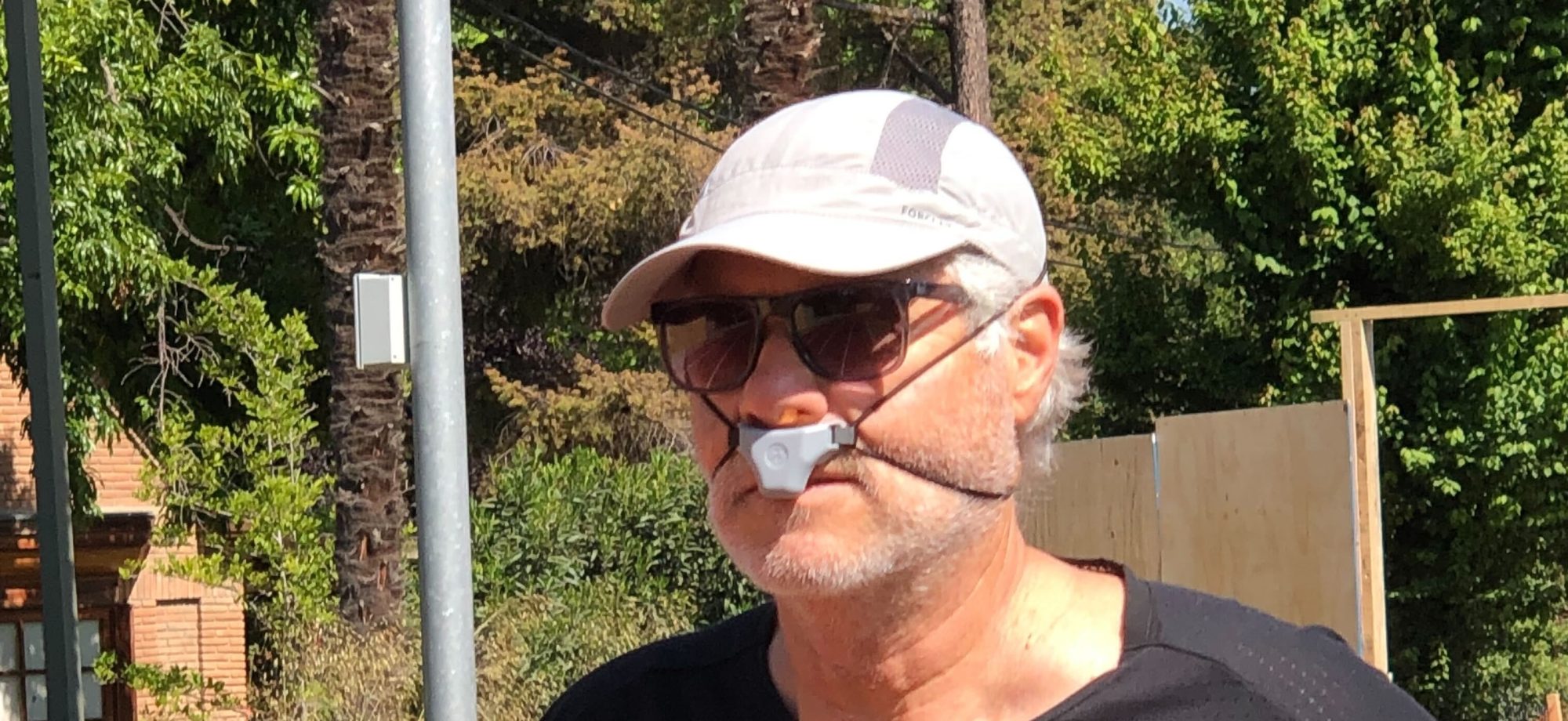
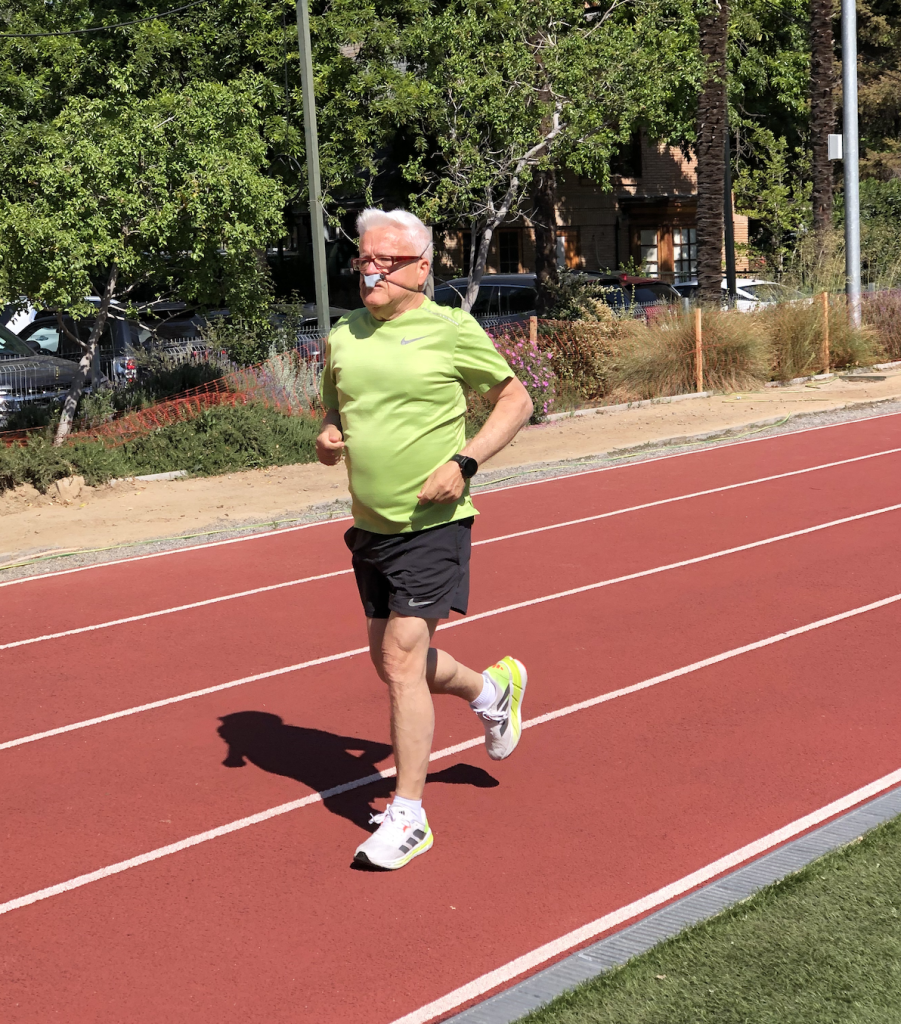
Comfort was one of the most frequently highlighted aspects by participants. The CHASKi device does not interfere with walking or jogging, does not restrict movement, and does not cause respiratory discomfort. For older adults, this is a critical factor. When the measurement does not affect the experience, participants relax, move more naturally, and the data better reflects their true functional capacity.
Another important element emerged, one that is often underestimated in health and physical activity programs: motivation. Participants enjoyed being assessed and knowing that their effort was being evaluated using objective criteria. Understanding that these results could serve as a baseline for future comparisons sparked curiosity, engagement, and a greater willingness to put in effort. Measuring not only informs, it also educates and motivates.
Group-level results in the senior cohort
At a group level, the aggregated data from the eleven assessments provides a clear picture of both physiological and performance related behavior.
From a physiological perspective, exercise intensity remained mostly within moderate and submaximal ranges, both in respiratory and cardiovascular terms. This is consistent with a well-tolerated test, performed at an intensity appropriate for the participants’ age and functional context.
In terms of performance, a key finding is that all participants were able to complete the 1000-meter test, which in itself is a meaningful indicator of functional capacity in older adults. In addition, the average completion time was approximately 12 minutes, faster than what is typically reported for this age group. The average speed was 5.2 km/h, with peak speeds reaching up to 12.9 km/h. These values are generally associated with a low risk of falls and good functional capacity. That said, some degree of heterogeneity was observed within the group, with a few participants falling into a moderate fall-risk category, highlighting the importance of assessing individuals rather than assuming uniformity in group-based programs.
Finally, the absence of pauses during the test suggests good effort tolerance and effective intensity regulation throughout the task.
Practical insights for coordinators, coaches, and healthcare professionals
For the professionals at the Sport Clinic, this assessment provided a concrete tool to categorize participants, identify different functional profiles, and determine where to place emphasis within the program. Having access to objective data supports better decision-making, enables more individualized recommendations, and improves communication of results with participants themselves.
These assessments should not be seen as a single snapshot, but rather as a baseline from which progress can be tracked over time. Repeating this type of evaluation makes it possible to objectively document improvements, adjust training or activity loads, and assess the real impact of physical activity programs on health, functionality, and autonomy.
When technology adapts to people and not the other way around, assessment stops being a barrier and becomes a practical, everyday tool in support of movement, health, and data informed decision making.
Assess to improve
The experience with the Sport Clinic Senior Program shows that it is entirely feasible to assess older adults in a simple, fast, and well tolerated manner, while obtaining physiologically meaningful information for both performance and health. Objective data allows for better decisions, more personalized interventions, and a more precise way of supporting individual progress.
If you work with senior populations, health programs, or functional-oriented training, CHASKi helps you implement assessments that integrate seamlessly into your context and deliver clear, actionable insights.