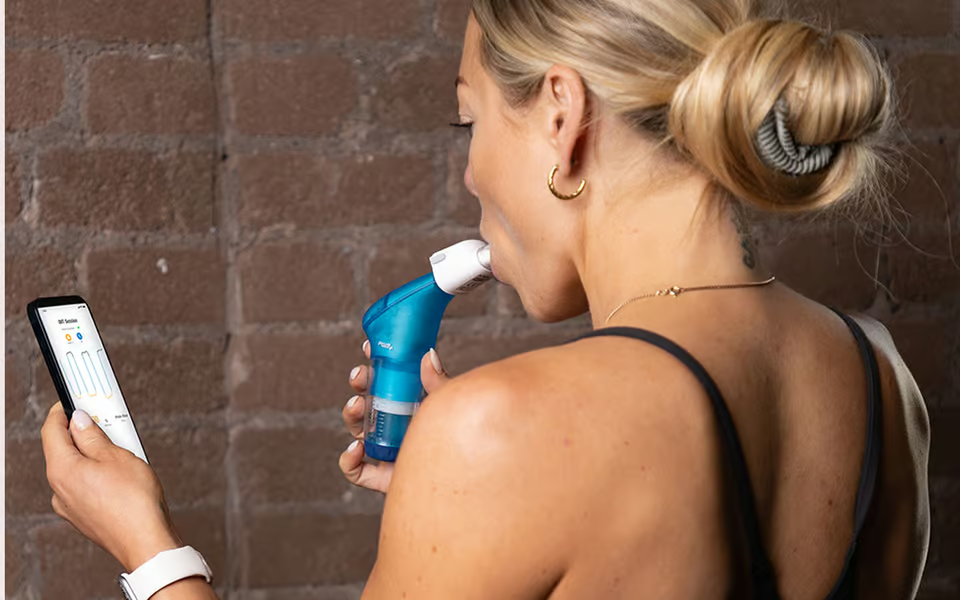

Breathing Patterns and Lung Function: What Endurance Athletes Can Learn from Recent Research

Breathing is the most constant movement we perform throughout the day. Yet it is also one of the least examined aspects of human physiology. For endurance athletes and coaches, breathing is usually associated with ventilation, oxygen uptake, and the response to exercise intensity. But recent research suggests that something even more basic may matter just …

Patrones de respiración y función pulmonar: lo que los atletas de resistencia pueden aprender de una investigación reciente

Respirar es el movimiento más constante que realizamos a lo largo del día. Sin embargo, también es uno de los aspectos menos observados de la fisiología humana. Para los atletas de resistencia y sus entrenadores, la respiración suele asociarse con la ventilación, el consumo de oxígeno y la respuesta al aumento de la intensidad del …

CHASKi on the Track: Lab-Grade Precision in the Real World

For decades, physiological testing for endurance athletes has been dominated by laboratory-based ergospirometry—bulky equipment, masks, and controlled environments. While these setups are the gold standard for measuring key markers like ventilatory thresholds (VT1, VT2) and respiratory rate (RR), they come with limitations: cost, accessibility, and an environment that often feels far removed from real racing …

First Ventilatory Threshold (VT1): The physiological key to your endurance performance

As experts in physiology and performance, we know that endurance success lies in deeply understanding our body’s signals. Today, we’ll delve into a fundamental concept for athletes and coaches: the First Ventilatory Threshold (VT1). The First Ventilatory Threshold, or VT1, is a critical physiological point during progressive exercise. It represents the exercise intensity at which a …

Primer Umbral Ventilatorio (VT1): La clave fisiológica de tu resistencia

Como expertos en fisiología y rendimiento, sabemos que el éxito en el endurance reside en comprender a fondo las señales de nuestro cuerpo. Hoy, profundizaremos en un concepto fundamental para atletas y entrenadores: el Primer Umbral Ventilatorio (VT1). ¿Qué es el primer umbral ventilatorio (VT1)? El Primer Umbral Ventilatorio, o VT1, es un punto fisiológico crítico …

Race Pacing Starts with Physiology: Why Matching Distance to Your Thresholds Matters

Success in endurance sports isn’t just about grit—it’s about precision. One of the most overlooked performance strategies is aligning your race pacing with your ventilatory thresholds. Whether you’re targeting a 10K or a 100-miler, understanding how each race maps to your body’s internal limits is critical. That’s exactly where CHASKi steps in. CHASKi is the first wearable designed specifically for …

The Science of Breathing: How RMT Enhances Aerobic Power and Delays Fatigue

When endurance athletes hit a plateau, they often look to tweak training intensity, diet, or recovery. But one critical and often overlooked component might be holding them back: respiratory muscle function. The muscles that power our breathing—like the diaphragm and intercostals—are trainable, and targeted respiratory muscle training (RMT) can deliver measurable performance gains, even for already well-trained …

Ventilatory Thresholds vs. Lactate Thresholds: Are They Competitors or Complementary Metrics?

Ventilatory Threshold and Lactate: Complementary Metrics for Smarter Training In the world of endurance training, metrics reign supreme. From heart rate to power output, athletes rely on data to refine their training strategies and achieve peak performance. Among these metrics, ventilatory threshold (VT) and blood lactate levels stand out as two of the most insightful …

Introducción a la Respiración para Atletas de Resistencia

La investigación sugiere que los patrones de respiración controlados e intencionados pueden influir de manera significativa en los resultados deportivos. Por ejemplo, se ha demostrado que ciertas técnicas de respiración mejoran el rendimiento de resistencia al optimizar la utilización de oxígeno y retrasar la aparición de la fatiga [1]. Otros estudios documentan cómo diferentes técnicas …

HIIT vs. Sprint Intervals: How to Optimize VO₂max for Endurance Athletes

Maximal oxygen uptake (VO₂max) is the cornerstone of endurance performance, and two recent studies confirm that aerobic high-intensity interval training (HIIT) is superior to sprint interval training (SIT) in improving VO₂max for both men and women. For endurance coaches and self-educated athletes, these findings offer critical insights into structuring training programs for peak performance. Key Findings From …