
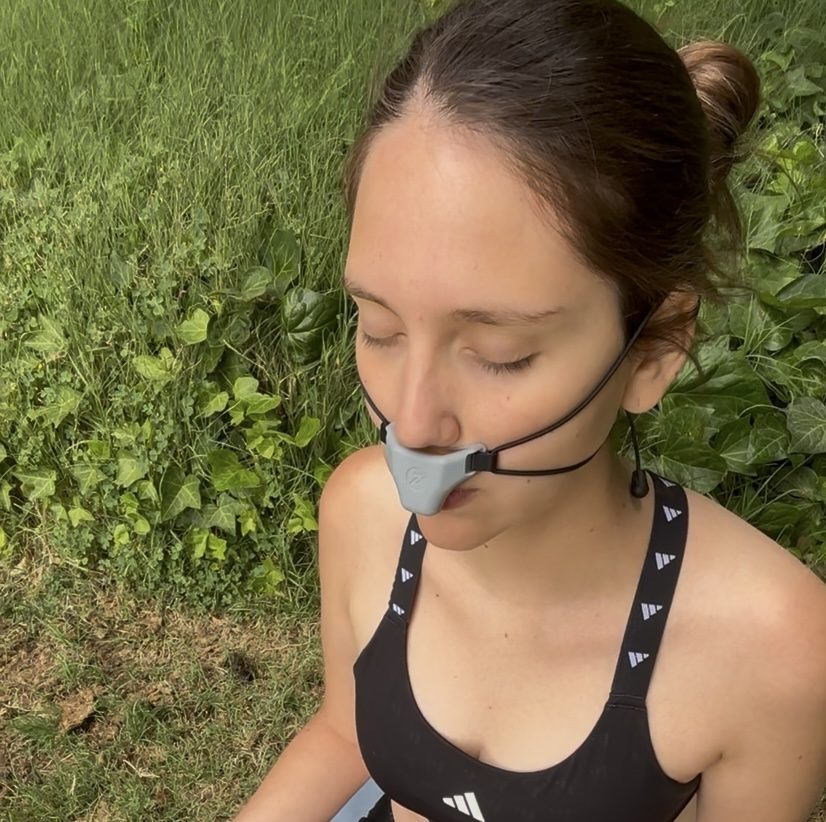
In endurance training it is common to focus on metrics such as power, pace or heart rate. However, there is another system that plays a decisive role in how an athlete responds to training and recovers between sessions: the autonomic nervous system or ANS. This system regulates automatic functions such as breathing, heart rate and blood pressure. Understanding how to influence it through breathing allows us to improve recovery and enhance adaptation to training.
The ANS is composed of two branches: the sympathetic system, which prepares the body for activation and effort, and the parasympathetic system, which facilitates recovery and physiological restoration. An appropriate balance between these two branches is essential. A prolonged state of sympathetic activation can delay recovery and increase fatigue, while efficient parasympathetic activation is associated with better physiological stress management.
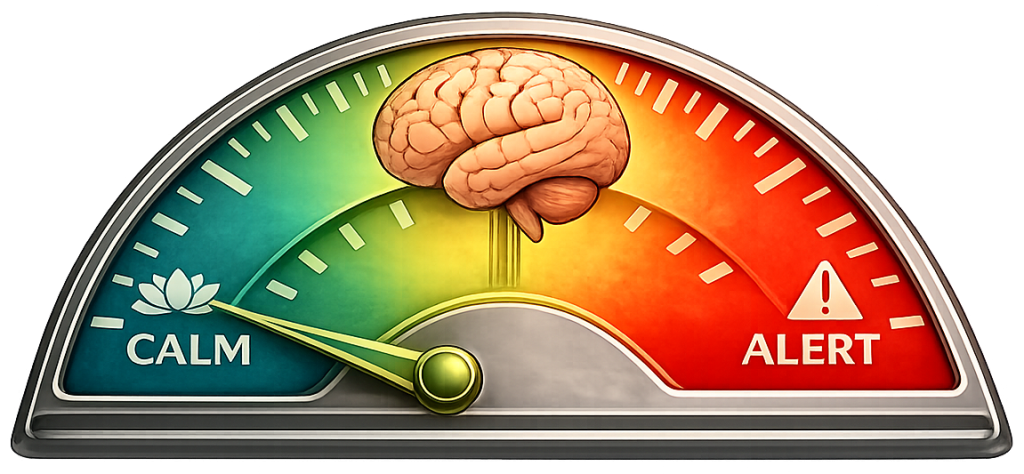
Slow Breathing and Cardiac Coherence
The way we breathe directly influences this balance. Slow and deep breathing, especially with a prolonged exhalation, activates vagal tone, meaning the parasympathetic branch of the ANS. Studies have shown that slow breathing, defined as fewer than ten breaths per minute, is associated with reduced physiological stress and increased parasympathetic tone measured through heart rate variability or HRV (4,5).
Cardiac coherence describes a more stable synchronization between breathing and the variation in time between heartbeats. When this pattern is achieved, the heart and respiratory system work in harmony, resulting in a more efficient and resilient autonomic response to stress (6).
HRV as an Indicator of Autonomic Control
HRV is a non-invasive indicator that reflects the adaptive capacity of the ANS. Higher resting HRV values are typically associated with greater parasympathetic dominance and improved recovery between training sessions. In endurance sports, HRV is used as a marker to adjust training load and monitor athlete readiness and fatigue (1).
A meta-analysis on slow breathing and HRV biofeedback interventions concluded that these practices improve vagal tone and autonomic flexibility, offering a practical tool for stress modulation and physiological recovery (4).
Cases of Athletes Improving Post Session Recovery
Although research specifically focused on athletes is still emerging, multiple clinical studies and reviews have reported positive changes in HRV and stress indicators following regular slow breathing and breathwork practice. For example, controlled breathing biofeedback has been shown to increase HRV amplitude across repeated sessions and reduce perceived stress symptoms (2,4).
Additionally, research suggests that breathing rhythms around six cycles per minute promote resonance between respiration, heart rate and blood pressure, enhancing parasympathetic effects and facilitating recovery after high training loads (6,7).
Visualizing the Effect in Real Time with CHASKi
One of the major challenges of applying breathwork to performance has been objective quantification. With CHASKi that barrier is removed. This system allows users to visualize in real time how different breathing protocols modify respiratory rate and curve. This visibility accelerates learning, enables personalization of breathing exercises and helps coaches evaluate which strategies are most effective for each individual athlete.
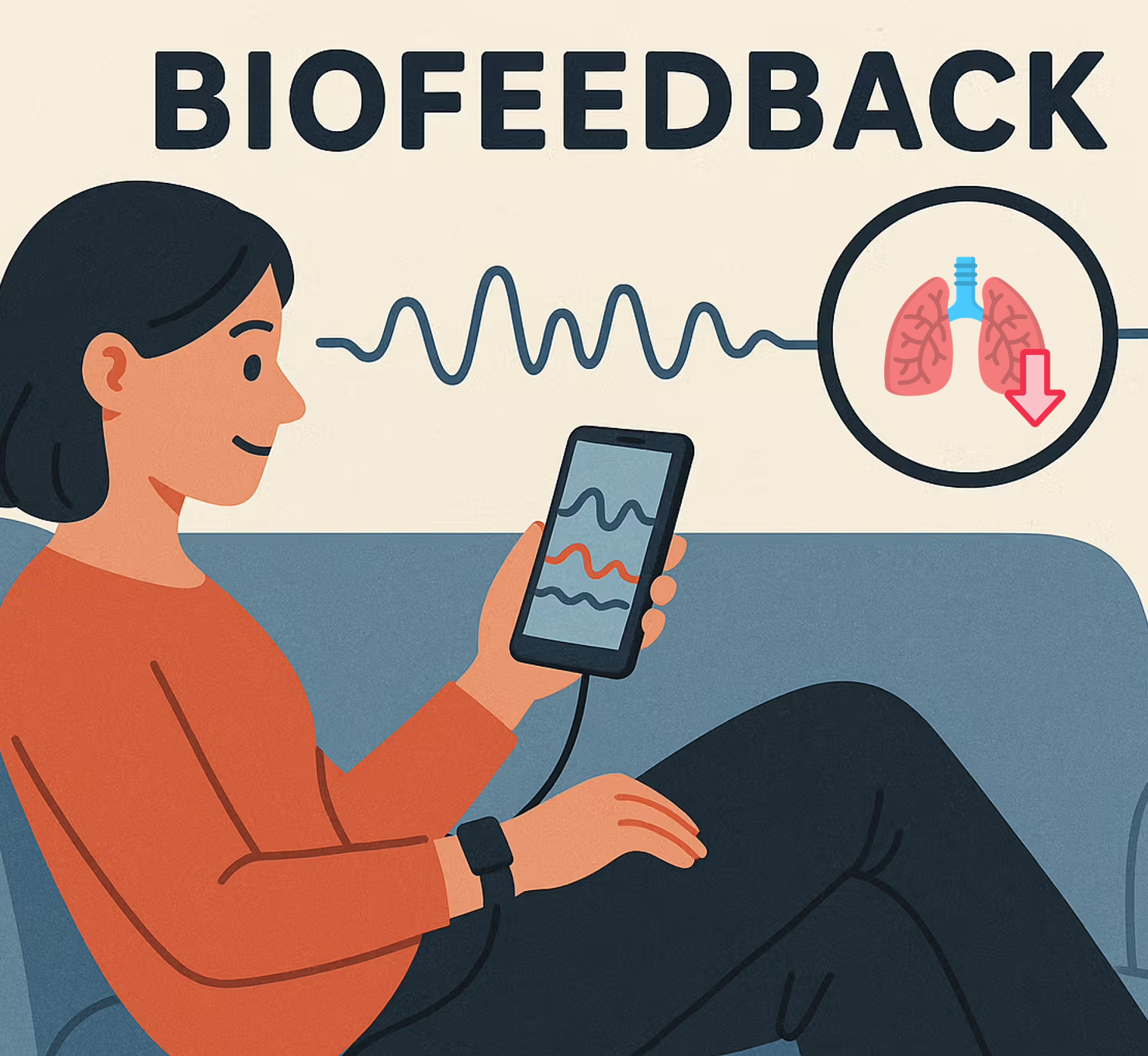
CHASKi is a biofeedback system that takes something we cannot see, breathing, and makes it visible and easy to understand.
Breathwork moves from being an intuitive practice to becoming a measurable and trainable tool. For endurance athletes where recovery is as important as training load, mastering breathing can make a meaningful difference in long term adaptation and physiological stress management.
Sources:
[1] Giorgi, F., & Tedeschi, R. (2025). Breathe better, live better: the science of slow breathing and heart rate variability. Acta Neurológica Belgica, 125(6), 1497–1505. https://doi.org/10.1007/s13760-025-02789-w
[2] Chen, Y., Zhang, X., Sürücü, C. E., Güner, S., Cüce, C., Aras, D., Akça, F., Arslan, E., & Birol, A. (2021). The effects of six-week slow, controlled breathing exercises on heart rate variability in physically active, healthyindividuals. Pedagogy of Physical Culture and Sports,1518. https://doi.org/10.15561/26649837.2021.0101
[3] “Controlled and spontaneous breathing effects on cardiovascular variability in athletes”. (1998). Respiratory sinus arrhythmia and cardiovascular neural regulation in athletes. PubMed. https://pubmed.ncbi.nlm.nih.gov/9502348/
[4] Ma, X., Che, X., & Zhou, Y. (2023). Effects of voluntary slow breathing on heart rate and heart rate variability: a systematic review and meta-analysis. Neuroscience & Biobehavioral Reviews, 104711. https://doi.org/10.1016/j.neubiorev.2022.104711
[5] Kromenacker, B. W., Sanova, A. A., Marcus, F. I., Allen, J. J. B., & Lane, R. D. (2018). Vagal mediation of low-frequency heart rate variability during slow yogic breathing. Psychosomatic Medicine, 80(6), 581587. https://doi.org/10.1097/PSY.0000000000000603
[6] Pinna, G. D., Maestri, R., La Rovere, M. T., Sleight, P., Crespi, G., Furlan, R., & Malliani, A. (2013). Influence of respiratory frequency of slow-paced breathing on vagally-mediated heart rate variability. European Journal of Applied Physiology, 113(5), 1183–1185. [As indexed in PubMed search summaries]
[7] Li, C., Changjun, Q., Zhang, J., & Chai, W. (2018). Effects of slow breathing rate on heart rate variability and arterial baroreflex sensitivity in essential hypertension. Medicine (Baltimore), 97(18), e0639. https://www.ncbi.nlm.nih.gov/pmc/articles/PMC6392805/