

Breathing is the most constant movement we perform throughout the day. Yet it is also one of the least examined aspects of human physiology. For endurance athletes and coaches, breathing is usually associated with ventilation, oxygen uptake, and the response to exercise intensity. But recent research suggests that something even more basic may matter just as much. The way we breathe.
A recent study published in Scientific Reports examined how different breathing patterns relate to pulmonary function in endurance trained athletes. The findings highlight an often overlooked point. Even highly trained athletes do not always breathe in the most efficient way.
Do Endurance Athletes Always Breathe Well?
The researchers studied 69 elite endurance athletes from different disciplines and compared them with a control group of healthy non athletes. Participants underwent a comprehensive set of pulmonary function tests including spirometry, plethysmography, and diffusion capacity testing. The researchers also assessed breathing patterns using the Hi Lo test, a simple method used to observe whether breathing is primarily diaphragmatic, thoracic, or dysfunctional.
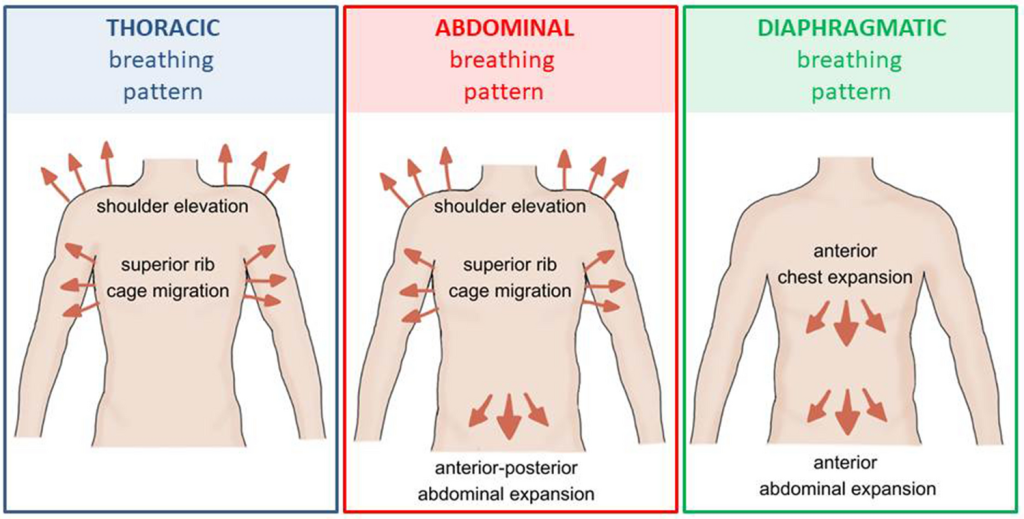
One of the most interesting findings was that nearly half of the athletes showed signs of dysfunctional breathing patterns. Although this prevalence was slightly lower than in the non athlete group, it still highlights that high training volume does not guarantee optimal breathing mechanics.
Nearly half of the athletes showed signs of dysfunctional breathing patterns
For coaches and athletes who assume that endurance training naturally optimizes the respiratory system, this result is a useful reminder. Performance adaptations do not necessarily correct fundamental movement patterns.
Why Diaphragmatic Breathing Matters
The study found clear differences between breathing patterns. Athletes who demonstrated a diaphragmatic breathing pattern showed better results in several measures of pulmonary function.
They presented higher values in spirometry and lung volumes, as well as greater diffusion capacity for oxygen transfer in the lungs. In simple terms, their respiratory systems appeared to function more efficiently.
Researchers also observed differences in respiratory system mechanics measured through forced oscillation techniques. These tests evaluate how airways respond to airflow and pressure during breathing. The diaphragmatic breathing pattern was associated with more favorable mechanical characteristics of the respiratory system.
While these findings do not directly measure performance outcomes, they suggest that breathing mechanics influence the physiological capacity of the respiratory system.
What This Means for Coaches and Athletes
For endurance coaches, the takeaway is simple. Breathing patterns are not just a wellness trend or a topic reserved for yoga classes. They are part of respiratory physiology and may influence how effectively the lungs and airways function.
If nearly half of elite athletes demonstrate dysfunctional breathing patterns, there is clearly room for improvement. Assessing breathing during rest and low intensity exercise can provide valuable insight into an athlete’s respiratory mechanics.
For self coached athletes and physiology enthusiasts, this also reinforces the idea that breathing is trainable. Small changes in awareness, posture, and breathing mechanics can potentially influence efficiency and comfort during exercise.
Beyond Sport: Why This Matters for Everyone
Perhaps the most interesting aspect of this research is that the findings are not limited to athletes. The control group of non athletes actually showed an even higher prevalence of dysfunctional breathing patterns.
This suggests that many people spend much of their day breathing in ways that are less than optimal. Sedentary lifestyles, stress, and prolonged sitting may all influence how we breathe.
Whether someone is training for a marathon or simply trying to improve their health, breathing patterns deserve more attention.
At Chaski, we believe respiratory physiology should be accessible and measurable. Understanding how we breathe is the first step toward improving both performance and wellbeing.
Sikora, M., Mikołajczyk, R., Łakomy, O., Karpiński, J., Żebrowska, A., Kostorz-Nosal, S., & Jastrzębski, D. (2024). Influence of the breathing pattern on the pulmonary function of endurance-trained athletes. Scientific Reports, 14, 1113.